
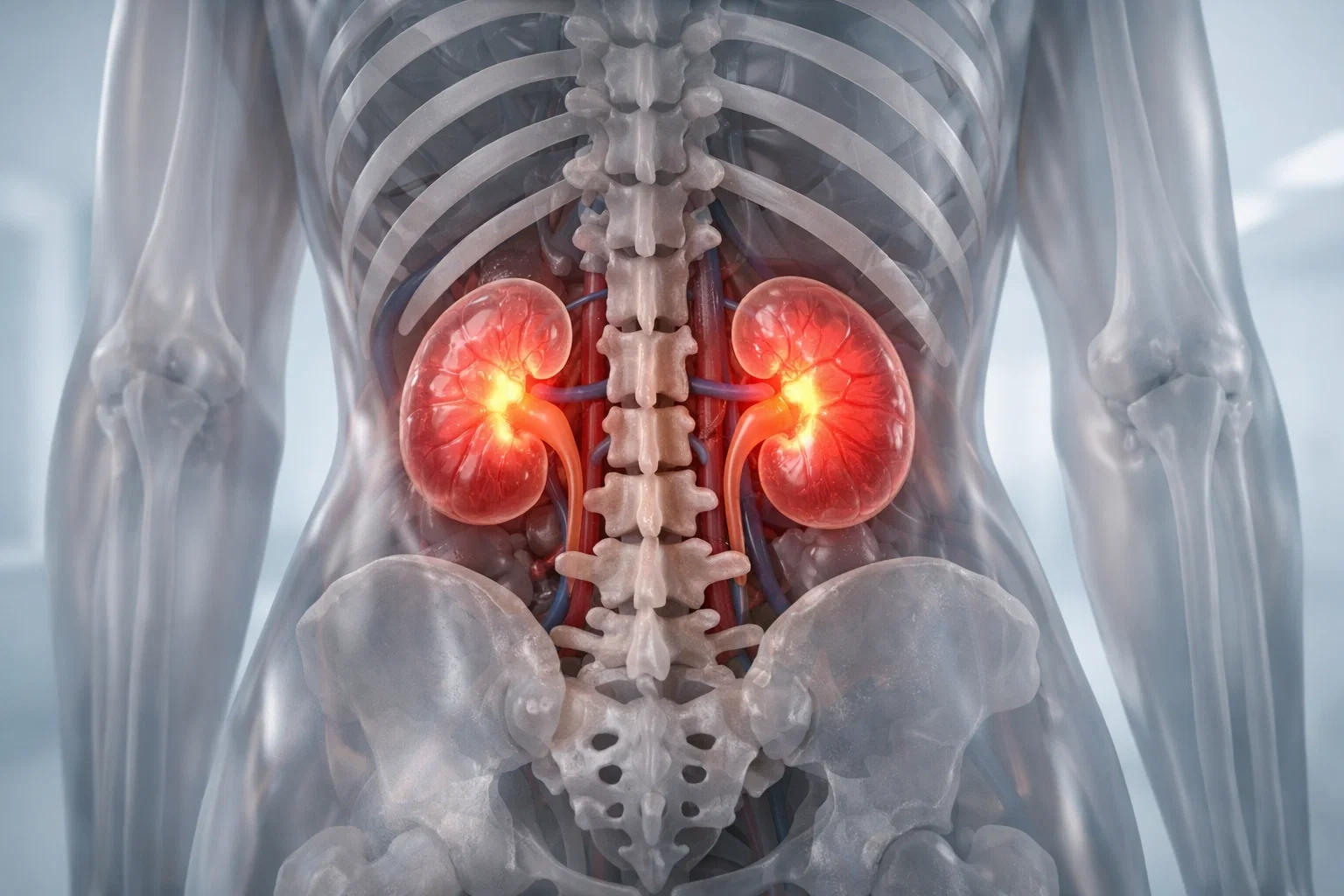
Ever reached for your side, rubbed your back, and wondered, “Is that just a sore muscle, or is it something else?” It is a common source of confusion. Because the kidneys sit deep within the body and tucked under the ribcage, pinpointing the kidney pain location can be tricky.
Do not panic. Most back pain is harmless muscle tension. However, understanding exactly where your kidneys are and what they feel like can help you decide if you need to schedule a doctor’s visit or just apply a heating pad.
Where Is the Kidney Pain Location?
To understand the pain, you first need to understand the anatomy. Your kidneys are two bean-shaped organs that sit on either side of your spine.
-
The Flank Area: The primary kidney pain location is the flank. This is the area on your back, just below your rib cage and above your waistline.
-
Under the Ribs: Unlike lower back pain, which typically centers on the lumbar area (the soft part of your lower back above the hips), kidney pain is usually felt higher up.
-
Deep Feeling: Kidney pain is typically perceived as deep inside the body. It often feels like it is radiating from your side rather than sitting on the surface of your skin or muscles.
Kidney Pain vs. Back Pain: The Key Differences
The easiest way to tell the difference is by how the pain reacts to your movement.
-
Muscle Pain: If you can change the intensity of the pain by stretching, bending, twisting, or pressing on the specific spot with your fingers, it is likely a muscle or skeletal issue.
-
Kidney Pain: This pain is usually constant. It rarely gets better or worse based on your posture or activity. It is often accompanied by other symptoms that indicate a systemic issue, such as fever or urinary changes.
Quick Comparison Guide
| Feature | Kidney Pain | Muscle Back Pain |
| Location | High back, under ribs, flank | Lower back, lumbar, hips |
| Movement | Stays the same regardless of motion | Changes when bending or twisting |
| Pain Quality | Deep, constant, or wave-like | Throbbing, stiff, or sharp with movement |
| Other Signs | Fever, burning pee, nausea | Muscle spasms, tightness |
What Does This Pain Usually Mean?
If you have confirmed that the pain is coming from your kidney location, it is often a sign of an underlying issue that requires attention. Common causes include:
-
Kidney Stones: These can cause sharp, intense waves of pain that radiate from the back down to the groin.
-
Kidney Infection (Pyelonephritis): This usually causes a dull, persistent ache in the flank area, often accompanied by a fever, chills, and pain during urination.
-
Blockages: Anything preventing urine flow can cause the kidney to swell, leading to a feeling of deep pressure or dull ache in the side.
When to Call Your Doctor
Because kidney pain can be a sign of infection or stones, you should not try to “tough it out” for long. Please contact your doctor or visit an urgent care center if you experience:
-
A fever or chills alongside the pain.
-
Pain that is sudden, severe, and does not go away.
-
Blood in your urine.
-
Pain that prevents you from sleeping or performing daily tasks.
-
Nausea or vomiting that will not stop.
If you are experiencing persistent pain in your kidney location, skip the guessing game. See your doctor today to get a proper diagnosis and treatment plan.