
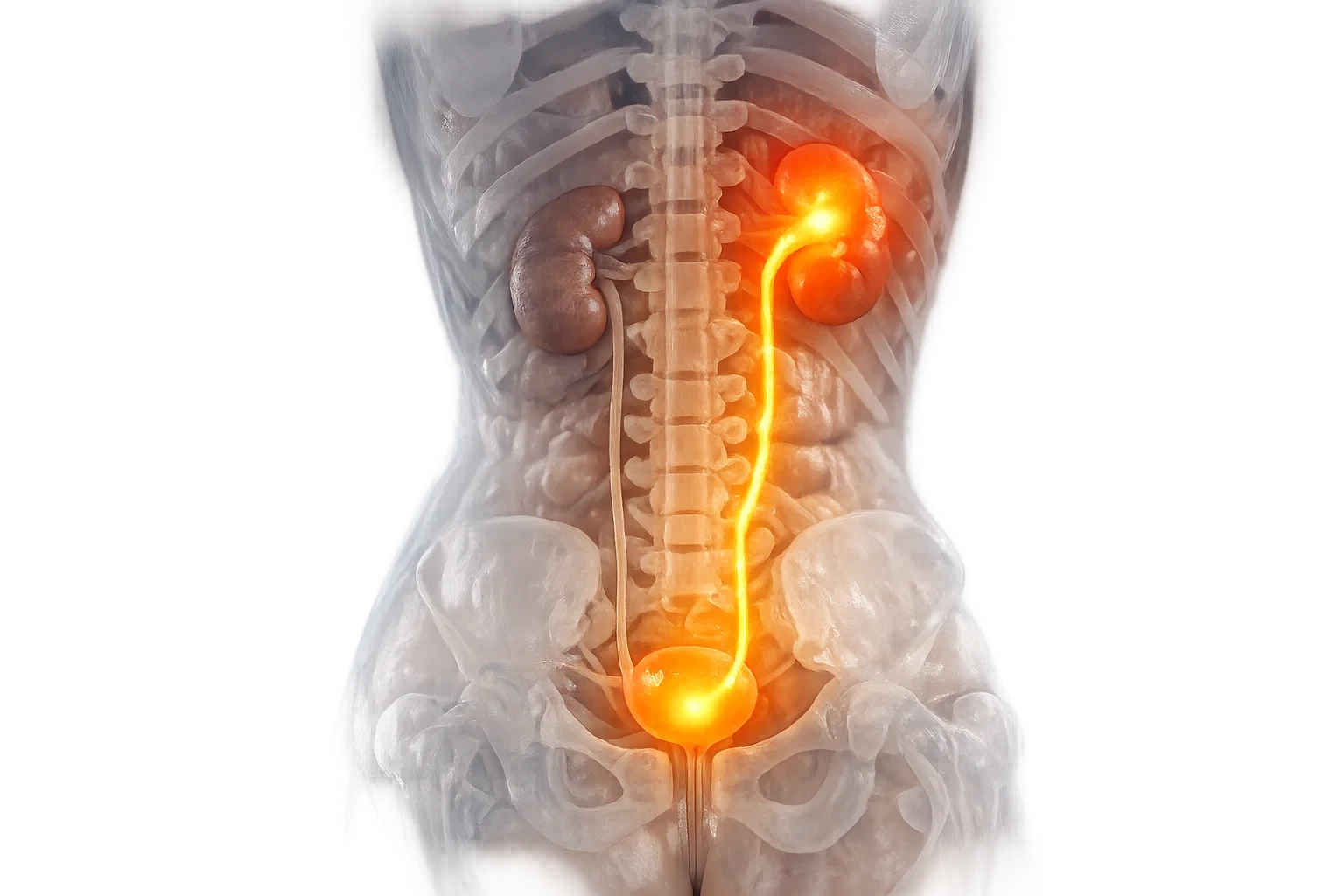
Is that burning sensation just another urinary tract infection (UTI), or has the infection climbed higher to your kidneys? It is a question many women ask, and for good reason. Because of our anatomy, women are much more prone to UTIs than men. While most bladder infections are easily cleared up, it is crucial to know when that infection has traveled and become a kidney infection (pyelonephritis).
Do not panic. Recognizing the difference is the first step toward feeling better. Spotting the signs early allows you to get the right treatment quickly, preventing potential complications.
Common Early Symptoms. What to Watch For
Kidney infections usually present with more intense symptoms than a simple bladder infection. While a UTI typically causes local discomfort, a kidney infection affects your whole body. If you are experiencing these indicators, pay close attention:
-
Fever and Chills: You might experience a sudden temperature spike, often 101 degrees Fahrenheit or higher, accompanied by uncontrollable shivering or feeling very cold.
-
Flank or Back Pain: This is the most common sign. Look for a deep, localized ache in your back or side, typically just below the ribs. It often feels deep inside rather than on the surface.
-
Urinary Changes: You may notice a strong, frequent urge to go, but only pass a small amount of urine. It often causes a sharp, burning sensation.
-
Upset Tummy: It is very common to feel unusually tired, nauseous, or to have a complete loss of appetite as your body fights the infection.
Why Women Are at Higher Risk
Anatomically, women have a shorter urethra than men. This makes it much easier for bacteria from the skin or rectum to travel into the bladder. Once bacteria settle in the bladder, they can sometimes move up the ureters into one or both kidneys. If you have a history of frequent UTIs, you should be extra vigilant for these symptoms.
When It Is Time to See a Doctor
Some symptoms indicate that you need to go to an urgent care center or emergency room immediately. Do not wait for a standard clinic appointment if you experience these severe “Danger Zone” symptoms.
| Early Warning | Danger Zone (Go to ER) |
| Mild fever, dull ache | High fever over 101°F, chills nonstop |
| Occasional burn when peeing | Cannot pee, blood in urine |
| Queasy feeling | Vomiting that will not stop, confusion |
Why It Matters (And What Docs Do Next)
Catching a kidney infection early is vital because, if left untreated, the bacteria can spread into the bloodstream or cause permanent scarring to the kidney tissue. The good news is that medical professionals have very effective treatments.
When you visit your doctor, they will likely ask for a urine sample to identify the specific bacteria. They will then prescribe a course of antibiotics, usually for 7 to 14 days. Even if you feel significantly better after two days, you must finish the entire prescription. Stopping early can allow the infection to return, often stronger and harder to treat than before.
Tips for Prevention
-
Stay Hydrated: Drinking plenty of water helps flush bacteria out of your system before they can reach the kidneys.
-
Practice Good Hygiene: Always wipe from front to back to prevent bacteria from entering the urethra.
-
Urinate Often: Do not hold your pee for long periods. Emptying your bladder regularly prevents bacteria from multiplying.
If you suspect you are dealing with kidney infection symptoms, skip the guessing game. Contact your doctor or visit your local urgent care today for a proper diagnosis and treatment plan.