
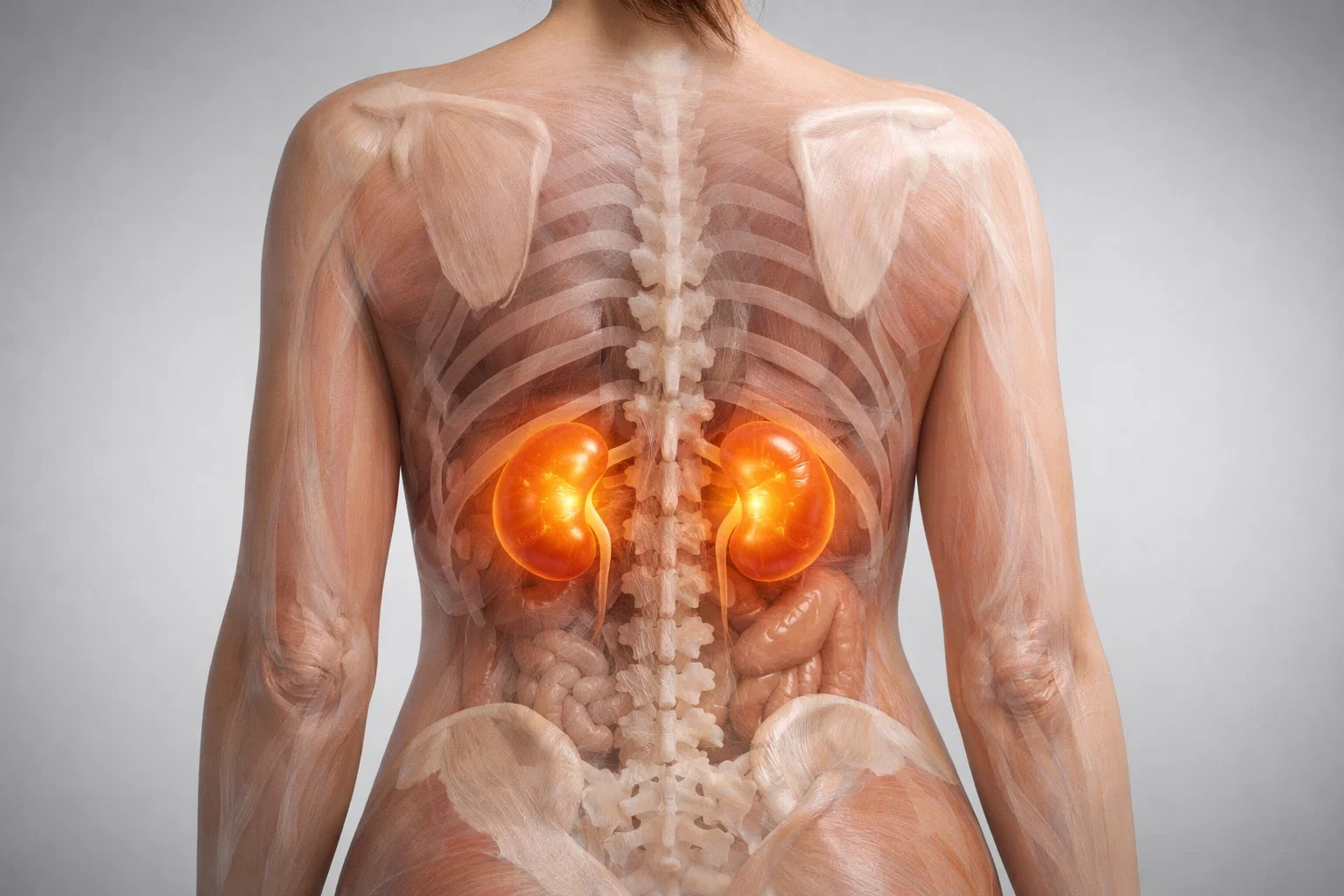
Is that sharp pain in your back just a strained muscle from a long day, or is it something else? Women are often told that back pain is just the result of stress, posture, or heavy lifting. While that is often true, sometimes your kidneys are trying to tell you that they need attention.
Do not panic, but do pay attention to your body. Understanding the specific female kidney pain location on the back is the first step in deciding whether you need a heating pad or a trip to the doctor.
Pinpointing the Female Kidney Pain Location
Where exactly should you be looking? Your kidneys are two bean shaped organs located deep inside your abdominal cavity. Because they sit tucked under your rib cage, the pain they cause is not usually in the lower back where you might expect a muscle strain to be.
-
The Flank Area: This is the most common kidney pain location. It is the area on your back just below the rib cage and above the waist.
-
Mid-to-Upper Back: Unlike typical lower back pain, kidney discomfort usually sits higher up.
-
Deep Sensation: Kidney pain feels like it is coming from inside your body, rather than from the skin or muscles on the surface.
-
One-Sided or Both: It is common to feel this pain on just one side, though it can affect both.
Symptoms Every Woman Should Watch For
Because of women’s unique anatomy, they are more prone to urinary tract infections (UTIs) than men. When a UTI is left untreated, bacteria can travel upward to the kidneys. If you have pain in the locations described above, check for these warning signs:
-
Urinary Changes: Do you have a burning sensation when you pee? Are you going to the bathroom much more often than usual?
-
Cloudy or Strong Urine: Pay attention to the color and smell of your urine.
-
Fever and Chills: If your body is fighting a kidney infection, you may feel shaky, cold, or develop a high temperature.
-
Nausea: Feeling sick to your stomach or having a loss of appetite is a common sign that the infection is more than just a local bladder issue.
Kidney Pain vs. Other Causes
It can be difficult to tell the difference between kidney pain and other types of discomfort common to women. Use this guide to help determine the source.
| Source of Pain | Description | Response to Movement |
| Kidney | Deep, constant, dull ache in flank | Stays the same regardless of movement |
| Muscle Strain | Surface-level, throbbing | Worsens when twisting or bending |
| Gynecological | Lower pelvic, cramping, cyclic | Varies based on your cycle |
Staying Safe in Our Climate
Living in Quetta and the broader region as we enter the warmer months of 2026, dehydration is a major risk. Hot weather causes you to lose fluids faster, which concentrates your urine and makes it easier for bacteria to grow or for kidney stones to form.
Pro Tip: Drink water consistently throughout the day. Do not wait until you are thirsty. Your goal should be to keep your urine light and clear. This simple habit is the best way to prevent the infections that lead to kidney pain.
When to Call Your Doctor
Do not try to tough this out at home. If you are experiencing pain in the flank area accompanied by fever, vomiting, or blood in your urine, you need to see a medical professional. Early treatment with antibiotics is usually very effective, but waiting too long can lead to complications that require hospital care.
Have you noticed persistent pain in your back that does not go away with rest? Stop guessing. Call your primary care physician or visit an urgent care clinic today to get a proper diagnosis.