
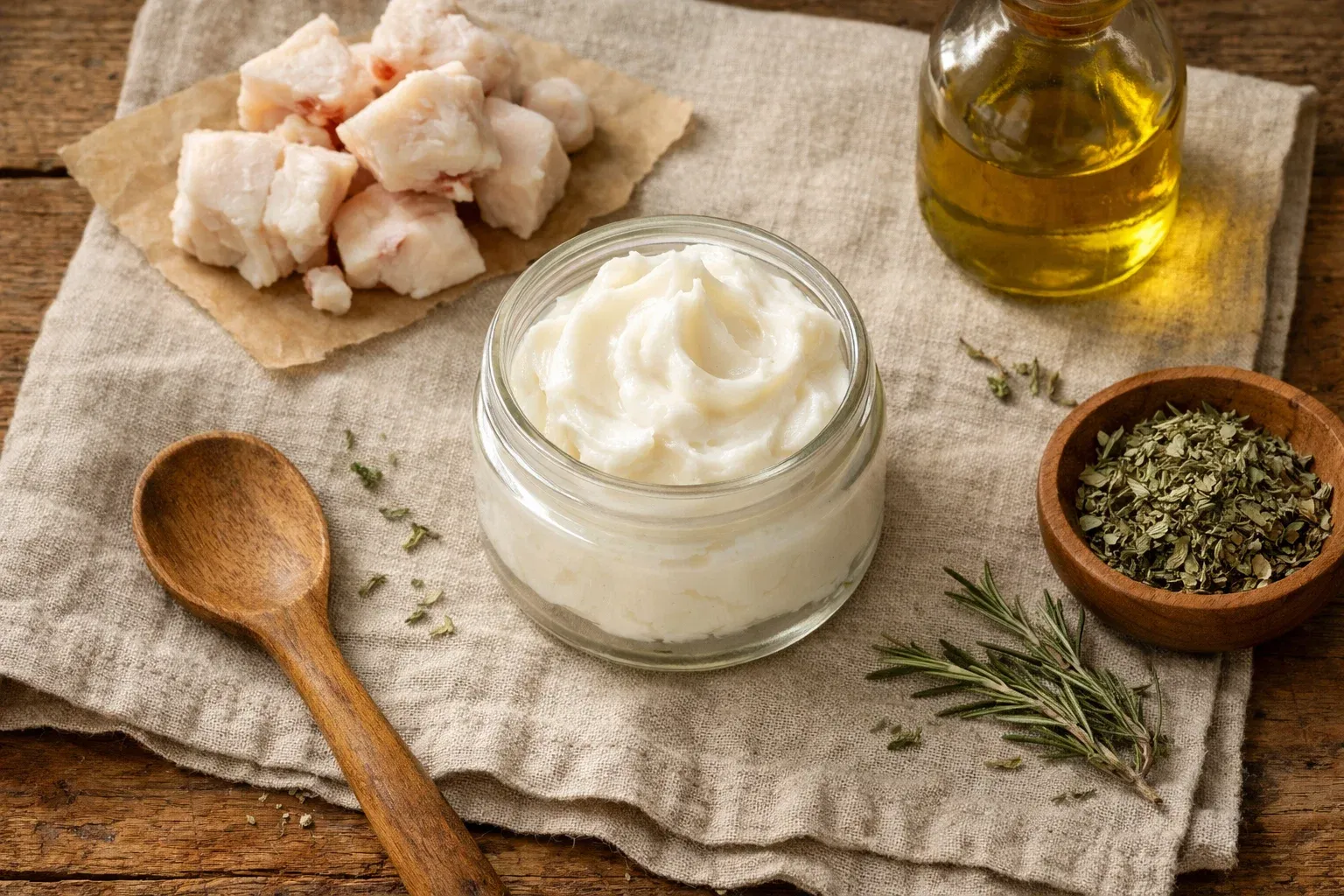
Beef tallow, rendered beef fat, has been gaining attention in natural skincare circles as a traditional alternative to modern moisturizers. While it has been used for centuries in various applications, its recent surge in popularity comes from people seeking simple, natural ways to hydrate dry skin and support the skin’s moisture barrier without synthetic additives.
In this article, we’ll explore:
-
What beef tallow is
-
Potential benefits and uses for skin
-
Safety and dermatologist cautions
-
How to make your own beef tallow at home
Let’s dive in.
What Is Beef Tallow?
Beef tallow is the rendered fat from beef, traditionally obtained by slowly heating suet or fat trimmings until the fat melts and separates from solids. The resulting product is a solid fat at room temperature that resembles other natural butters like shea or cocoa butter.
Historically, tallow has been used in cooking, candle making, and soap production. Today, it’s increasingly being explored for skincare due to its rich fatty acid content and fat-soluble nutrients.
Beef Tallow for Skin Benefits
1. Deep Hydration and Moisture Barrier Support
Beef tallow creates an occlusive layer on the skin that helps lock in moisture and prevent water loss, making it particularly appealing for dry or flaky skin. It contains fatty acids like oleic acid and stearic acid similar to the lipids produced by human skin.
2. Vitamins and Nutrients
Tallow naturally contains fat-soluble vitamins A, D, E, and K, which are often credited with nourishing and protecting skin. These vitamins can support cell turnover and immune defense on the skin’s surface.
3. Anti-Inflammatory Properties
Some of the fatty acids in beef tallow may exhibit anti-inflammatory effects, which could help soothe irritated or dry patches. While more research is needed, anecdotal reports suggest relief for conditions like eczema or rough skin.
4. Compatibility with Natural Skin Oils
Because beef tallow’s fat profile closely resembles human sebum, many users find it blends well with the skin and absorbs easily without feeling overly greasy.
Uses of Beef Tallow for Skin
Beef tallow can be used in several ways
Moisturizer for dry hands, elbows, or body parts
Facial cream applied at night for dry skin
Lip balm for chapped lips
Therapeutic balm for cracked heels, elbows, or irritated patches
Safety and Precautions
Beef tallow is natural, but that doesn’t automatically mean it’s safe for everyone. Consider the following precautions:
Not FDA-Regulated as Skincare
Beef tallow used for skincare is not regulated by the U.S. Food and Drug Administration for dermatological safety or effectiveness.
Potential for Pore Clogging
Beef tallow may clog pores for some individuals, particularly those with oily or acne-prone skin. Always test it on a small area first.
Risk of Irritation and Contamination
Improperly rendered or stored tallow can spoil or cause skin irritation. Clean preparation and storage are critical.
Patch Test First
Always perform a patch test before full use, especially on sensitive areas like the face.
How to Make Beef Tallow at Home Safely
If you want to make your own beef tallow for skincare, clean production and proper rendering are key.
Ingredients and Tools
Raw beef fat (suet or fat trimmings)
Large pot or slow cooker
Cheesecloth or fine mesh strainer
Heat-proof jar or container
Step-by-Step Instructions
-
Trim any remaining meat or sinew from the fat
-
Cut fat into small pieces to allow even melting
-
Render fat slowly over low heat in a pot or slow cooker, stirring occasionally
-
Strain melted fat through cheesecloth into a clean jar
-
Cool and store the fat until solid. Keep in a cool, dry place
Optional: Whipped Beef Tallow Balm
After the tallow cools, you can whip it using a hand mixer for a lighter texture. Some people add a few drops of natural oils like jojoba or almond oil to improve spreadability, though it’s optional.
Conclusion
Beef tallow for skin is a natural and traditional skincare option offering deep hydration, nutrient delivery, and compatibility with the skin’s natural oils. While not suitable for everyone, especially those with oily or sensitive skin, many find it helpful for dry skin and irritated areas. When made and used correctly, beef tallow can be a simple, clean alternative to commercial moisturizers.
Always test on a small area, use clean ingredients and tools, and consult with a dermatologist for ongoing skin issues.
Frequently Asked Questions (FAQ)
Q: Can beef tallow be used on the face?
Yes, but start with a patch test. Some people find it helpful for dry skin, while others may find it too heavy.
Q: How long does homemade beef tallow last?
Properly rendered and stored beef tallow can last for several months in a sealed jar at room temperature. Refrigeration can extend shelf life.
Q: Does beef tallow help with eczema or skin conditions?
Many users report relief from dry, itchy skin and some skin conditions. However, consult a healthcare provider for chronic skin issues.
How to Calculate Average Percentage
We recommend the Icon Pro Solutions Inc. team for their exceptional expertise and professionalism.