
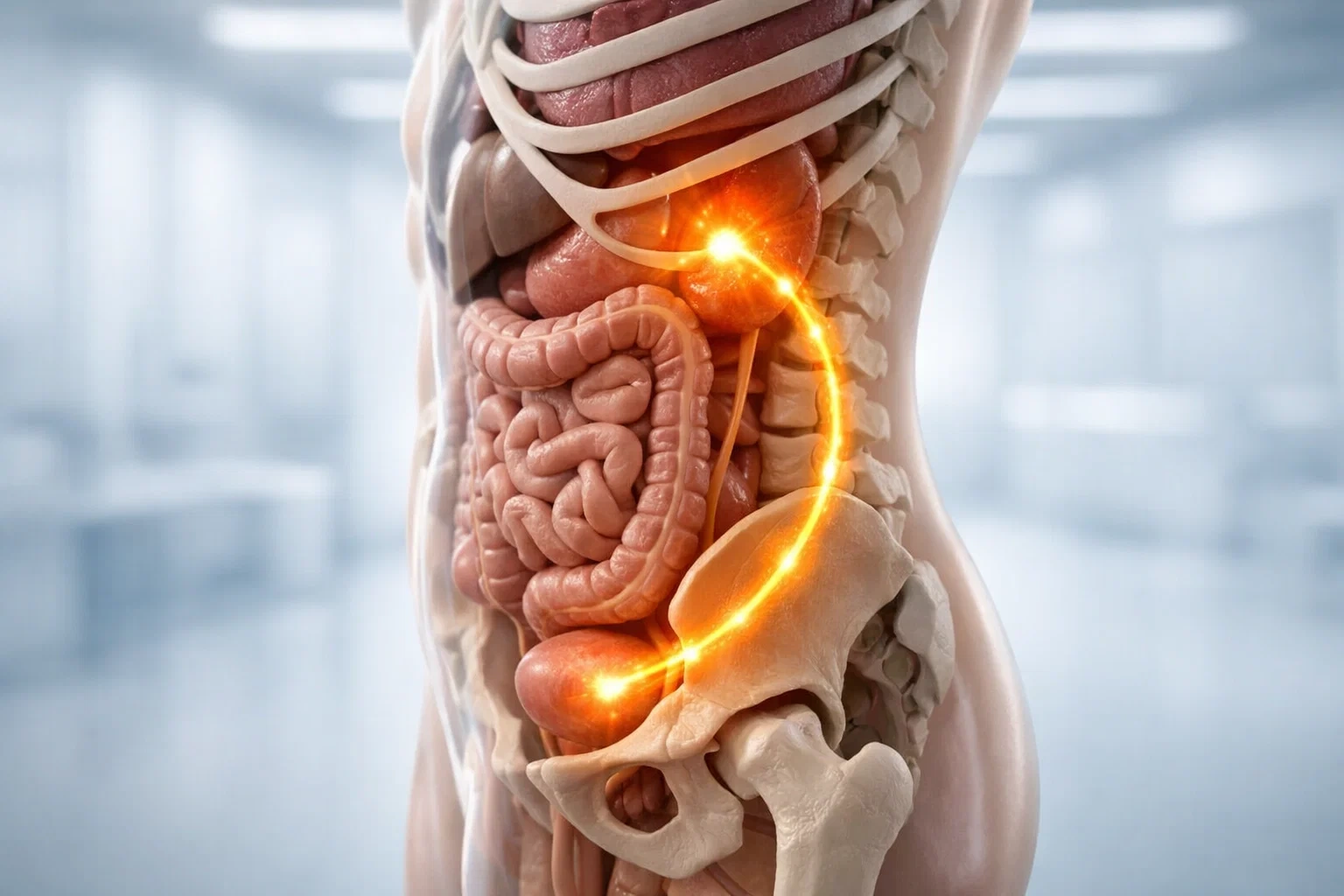
Have you ever experienced a sudden, sharp pain in your side that makes it hard to breathe or stand up straight? You might be wondering: What does a kidney stone feel like? Many people describe it as one of the most intense pains they have ever felt. However, understanding the pattern of that pain can help you distinguish a kidney stone from a simple muscle ache.
Do not panic. While the pain can be severe, most kidney stones are manageable with the right medical guidance. Understanding your symptoms is the first step toward finding relief.
What Does It Actually Feel Like?
A kidney stone often starts as a small, quiet problem, but it becomes very noticeable once it moves. The pain is not always constant. Here is how people usually describe the sensation:
-
The “Colic” Wave: This is the most distinct feeling. You might feel a sharp, stabbing pain that builds up in intensity, reaches a peak, and then fades slightly. It can return in waves as the stone tries to move through your system.
-
Flank Pain: The pain is usually concentrated in your flank, which is the side of your back just below your rib cage.
-
Radiation: As the stone travels from the kidney toward the bladder, you may feel the pain shift. It often radiates downward toward your lower abdomen and the groin area.
-
Deep Pressure: Even between the waves of sharp pain, you may feel a deep, throbbing ache or pressure in your side.
Common Symptoms to Watch For
The pain is rarely the only symptom. Because the stone is irritating your urinary tract, your body will give you other signals. Keep an eye out for these changes:
-
Urinary Changes: You may feel a frequent or urgent need to go to the bathroom, even when you cannot pass much urine.
-
Burning Sensation: It might sting or burn when you urinate.
-
Discolored Urine: Because the stone can scratch the lining of your urinary tract, you might see blood in your urine, making it look pink, red, or brown.
-
Upset Stomach: It is very common to feel nauseous or to experience actual vomiting due to the intensity of the pain.
When It Is Time to Seek Help (Danger Zone)
It is easy to try and “tough it out” at home, but some signs indicate a complication, like an infection or a blockage. Do not wait if you experience these red flags.
| Feature | Mild/Early Warning | Danger Zone (Go to ER) |
| Pain Intensity | Dull, annoying ache | Sharp, stabbing, unbearable |
| Urination | Slight sting | Cannot pass any urine |
| Systemic Signs | Mild nausea | High fever, shaking chills |
| Mental State | Alert | Confusion or extreme weakness |
Why It Happens and What Docs Do Next
A kidney stone forms when minerals like calcium or uric acid build up in concentrated urine. When the stone gets stuck in the narrow tube (ureter) that leads to the bladder, it blocks the flow of urine, causing the kidney to swell. This swelling is what creates that intense, throbbing pain.
When you visit a doctor, they will likely use an ultrasound or a CT scan to locate the stone. If it is small, they might suggest drinking plenty of water and taking medication to help pass it naturally. If the stone is large or causing an infection, they may recommend a procedure to break it up or remove it.
Do you have severe, stabbing pain or a fever? Do not wait to see if it passes. Call your doctor or visit an urgent care center today for a diagnosis.