
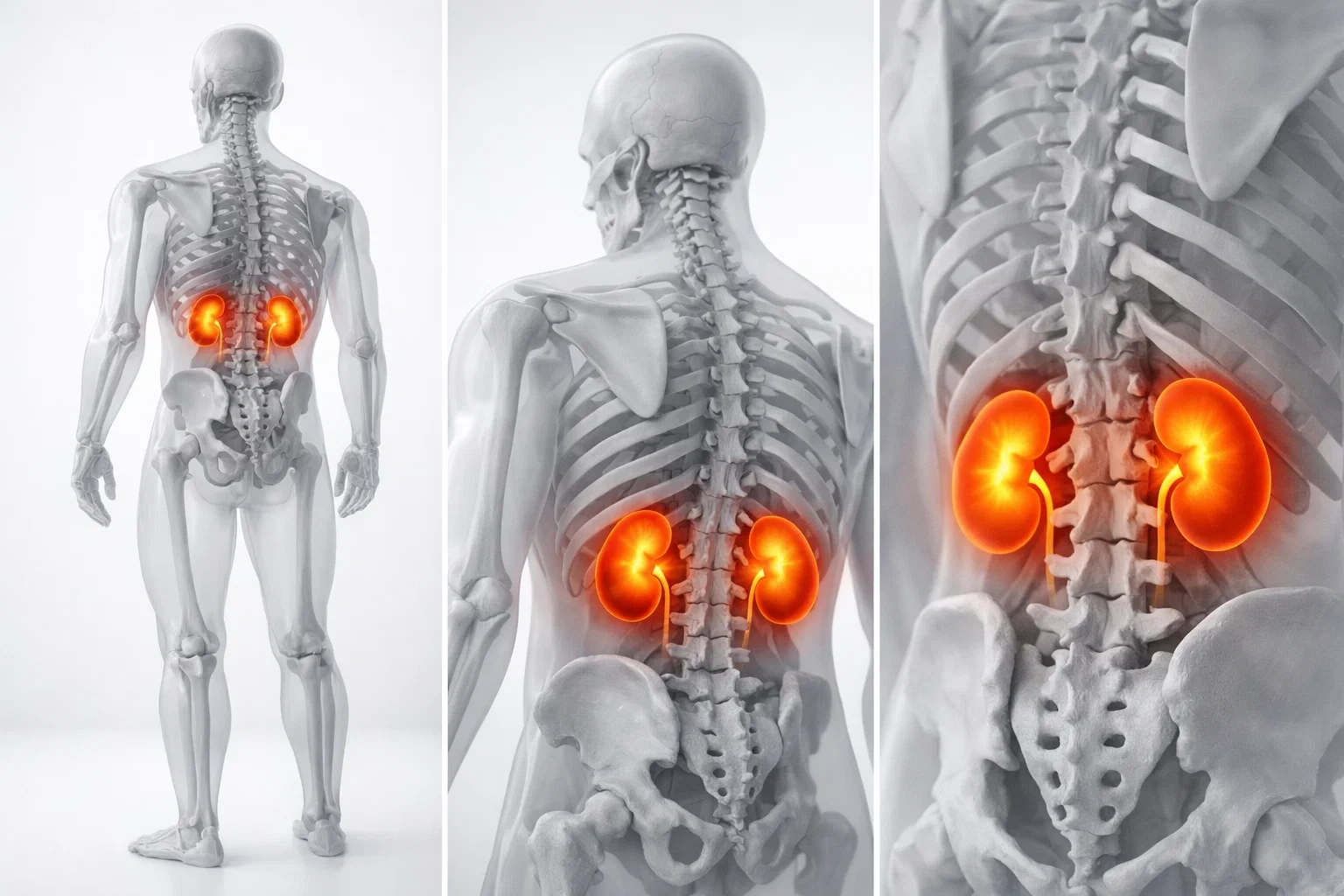
Have you ever felt a deep, nagging ache in your side and wondered if it was just a muscle strain or something deeper? It is a very common concern. Because the kidneys sit tucked away under your ribcage, the pain they cause is often confused with standard back pain.
Do not panic. While kidney pain can be uncomfortable or even severe, understanding exactly what it feels like can help you identify when it is time to seek professional medical advice. Here is your guide to understanding your body.
Pinpointing the Location: Where Is the Pain?
The first step in identifying kidney pain is knowing where your kidneys actually live. They are two bean-shaped organs located in your flank, which is the area on either side of your spine, just below your ribcage.
Unlike lower back pain, which typically centers on the spine or the hips, kidney pain is usually felt:
-
High in the back, tucked under the lowest ribs.
-
Often on just one side, though it can affect both.
-
Deep inside the body, rather than on the surface like a muscle ache.
Sometimes, this pain can travel. You might feel it radiating toward your abdomen, your groin, or even the inner thighs. This is particularly common if the pain is caused by a kidney stone moving through the urinary tract.
What Does Kidney Pain Feel Like?
The sensation of kidney pain can vary depending on what is causing it. It rarely feels like a simple muscle tug or a surface-level bruise. Most people describe it in two ways:
-
The Constant Ache: This is a dull, persistent, deep pain. It usually does not go away when you shift positions, stretch, or rest. If you gently tap the area over your kidney, you might feel a sharp tenderness or increase in pain.
-
The Sharp Waves: If the cause is a kidney stone, the pain may be sudden, intense, and come in waves. You might feel like you are having spasms, with the pain reaching a high peak and then easing slightly before returning.
Common Causes of Kidney Pain
Because your kidneys are vital for filtering waste, several different issues can cause them to hurt. Some of the most frequent triggers include:
-
Kidney Stones: These hard deposits of minerals can cause excruciating, wave-like pain as they try to exit the body.
-
Kidney Infection (Pyelonephritis): Bacteria from the bladder can travel upward. This often causes a dull, constant ache along with fever and chills.
-
Urinary Blockages: If something blocks the flow of urine, it can cause the kidney to swell, leading to a deep, uncomfortable pressure or ache.
-
Injury: Trauma to the flank area, such as from a fall or accident, can cause localized kidney pain and bruising.
When to See a Doctor (The Danger Signs)
It is easy to brush off a minor ache, but certain symptoms indicate that you should stop guessing and see a doctor right away. Please do not wait if you experience your pain alongside any of the following:
-
A fever or chills.
-
Blood in your urine.
-
Pain that is unbearable or prevents you from functioning.
-
Persistent nausea or vomiting.
-
An inability to pass urine.
-
A cloudy or foul-smelling urine.
If your pain is constant, does not improve after a day or two of rest, or is accompanied by signs of infection, professional medical care is the safest route.
If you are unsure about your symptoms, do not hesitate. See your doctor or visit an urgent care center for a proper diagnosis. It is always better to be safe when it comes to your health.