
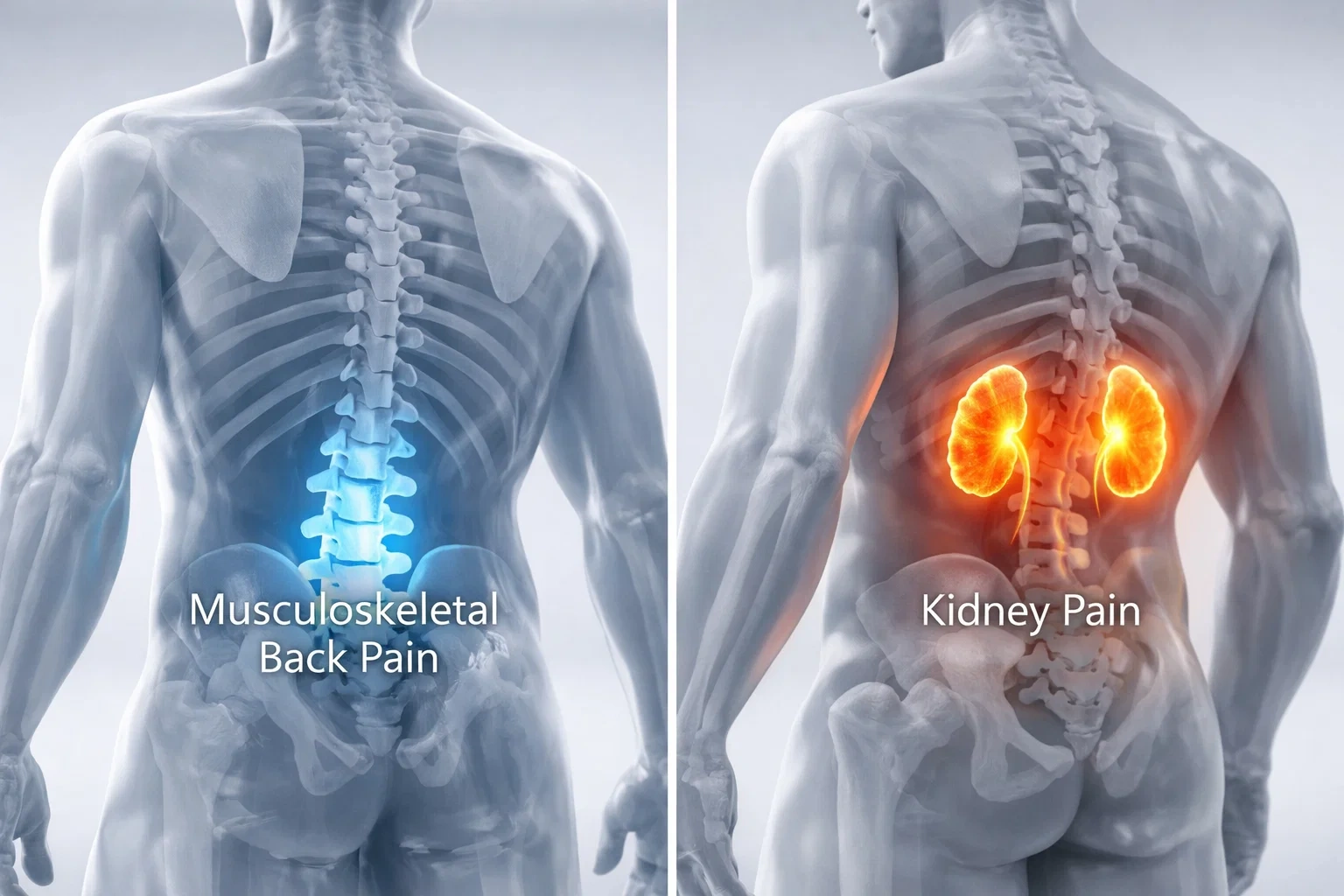
Do you have a sharp, nagging ache in your side and find yourself wondering if you pulled a muscle or if something else is going on? It is a very common dilemma. Kidney pain and back pain often overlap in location, which makes it tricky to know what is causing the discomfort.
Do not panic. Most back pain is caused by minor muscle strains, while kidney pain is usually a signal that your body needs medical attention for an underlying infection or stone. Here is a simple guide to help you distinguish between the two so you know whether to grab a heating pad or call your doctor.
Identifying Kidney Pain: Where Does It Come From?
Kidney pain is often mistaken for back pain because the kidneys are located deep in the abdominal cavity, protected by the lower ribs. When your kidneys are stressed, the pain typically feels different than a standard muscle ache.
-
The Location: Kidney pain is felt high in your back, just under the ribs and above the waist. It is often deep and feels like it is inside your body rather than on the surface.
-
The Sensation: This pain is usually a constant, dull ache, though it can become intense if there is a kidney stone.
-
The “Side” Factor: It is usually felt on one side, but it can radiate around to your groin or abdomen.
-
Associated Symptoms: Because the kidneys are part of your urinary system, you may notice cloudy urine, a burning sensation when you go to the bathroom, or a fever and chills.
Identifying Muscle Back Pain: The Usual Suspect
If your pain is caused by a muscle strain, ligament sprain, or posture issues, it will generally feel very different from internal organ pain.
-
The Location: Most back pain is centered in the lower back (lumbar region), well below the ribs.
-
The Trigger: Muscle pain usually kicks in after lifting something heavy, sitting for too long, or twisting your body awkwardly.
-
Movement Sensitivity: This is the biggest clue. If your pain gets better or worse when you bend, twist, walk, or change positions, it is almost certainly a muscle or skeletal issue.
-
Surface Feeling: You might feel tenderness when you press on the skin or muscle in the affected area.
Quick Comparison Table
| Feature | Kidney Pain | Muscle Back Pain |
| Location | High back, under ribs, above waist | Lower back, lumbar area |
| Movement | Does not change with movement | Worsens when bending or lifting |
| Pain Quality | Deep, dull, aching, or sharp (stones) | Throbbing, cramping, or stiff |
| Other Signs | Fever, burning pee, nausea | Muscle spasms, limited mobility |
When It Is Time to See a Doctor
If you are dealing with muscle back pain, home care like rest, gentle stretching, or over-the-counter pain relievers usually helps. However, kidney pain is a different story. If you suspect your pain is coming from your kidneys, you should not wait for it to go away on its own.
You should contact a doctor immediately if you experience:
-
A high fever or chills.
-
Blood in your urine.
-
Pain that is sudden, severe, and radiates to your groin.
-
Nausea or vomiting accompanying the pain.
-
Pain that does not improve after a few days of rest.
Are you struggling with persistent pain that does not feel like a muscle strain? Do not guess with your health. Call your primary care physician or visit an urgent care center to get a proper diagnosis.