
Many people experience back discomfort at some point in their lives. When pain appears in the lower back or side, it can be difficult to know whether it is coming from the muscles or from the kidneys.
Kidney pain and back pain can feel similar at first. However, they often have different causes, locations, and symptoms. Understanding the difference can help people recognize when medical attention may be needed.
The kidneys play an important role in filtering waste and balancing fluids in the body. When kidney problems occur, pain may develop in specific areas of the back or side.
What Is Kidney Pain?
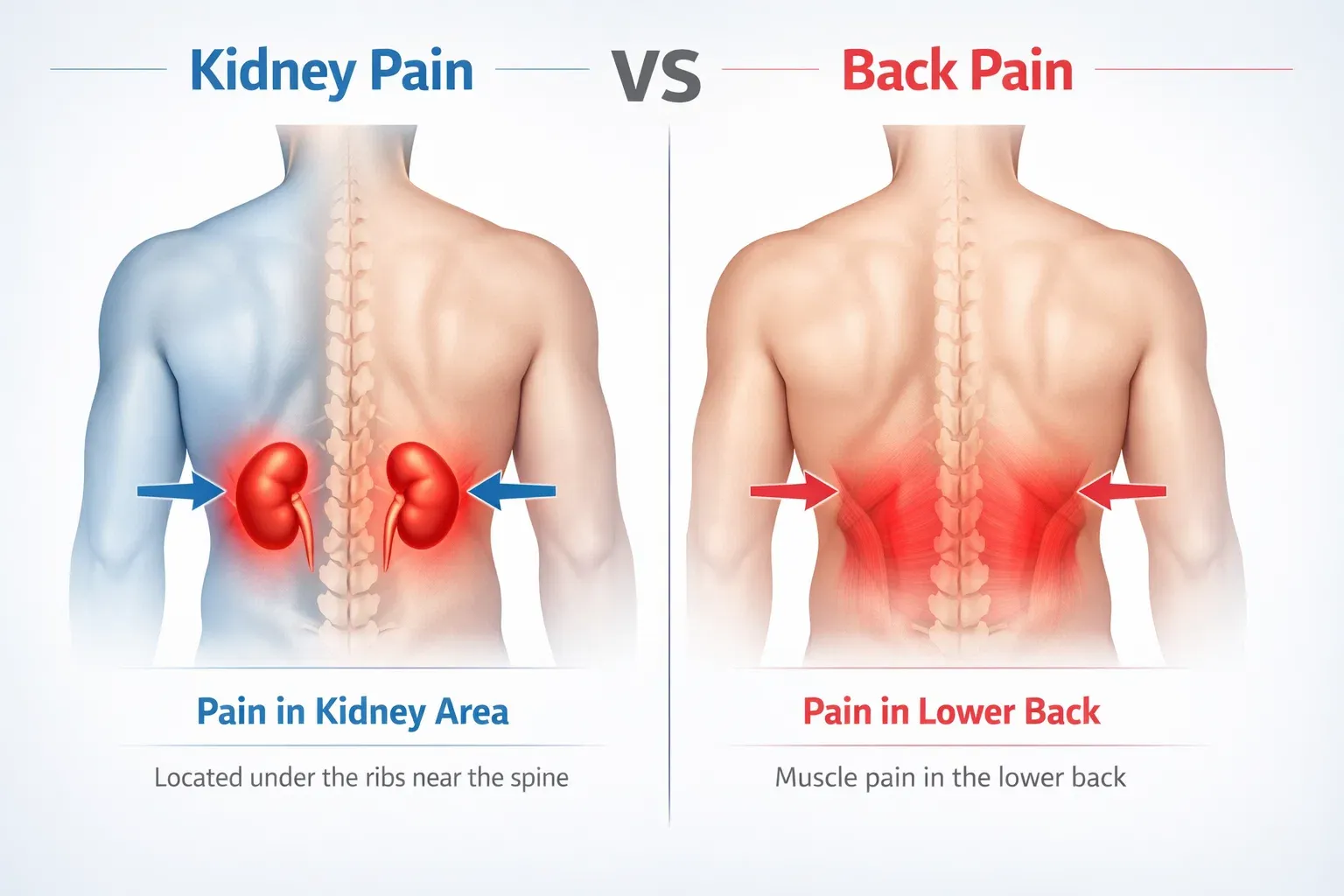
Kidney pain is discomfort that comes from one or both kidneys. The kidneys are located on each side of the spine just below the rib cage.
This type of pain is sometimes called flank pain. It often feels deeper than muscle pain and may remain steady rather than changing with movement.
Kidney pain can be caused by several conditions such as kidney stones, kidney infections, or other urinary tract problems.
What Is Back Pain?
Back pain usually comes from the muscles, bones, or joints in the spine. It can happen after physical activity, injury, poor posture, or muscle strain.
Muscle related back pain often changes with movement. It may improve with rest, stretching, or gentle activity.
Back pain is very common and is usually not related to kidney problems.
Where Is Kidney Pain Located?
Kidney pain is usually felt in the upper back or side of the body. The pain typically appears under the lower ribs and slightly to the right or left of the spine.
People may notice kidney pain in these areas:
• Upper back below the rib cage
• One side of the back near the spine
• The side of the abdomen or flank
• Pain that may spread toward the lower abdomen or groin
Because the kidneys sit deeper inside the body, the pain often feels deep and steady.
Where Is Back Pain Located?
Back pain can appear in many areas of the back depending on the cause. It is most commonly felt in the lower back.
Common locations for back pain include:
• Lower back muscles
• Middle back near the spine
• Areas affected by muscle strain
• Pain that worsens with bending or lifting
Unlike kidney pain, back pain is often linked to movement or posture.
Common Symptoms of Kidney Pain
Kidney problems may cause additional symptoms beyond back discomfort.
Some symptoms that may occur with kidney pain include:
• Fever or chills
• Nausea or vomiting
• Pain during urination
• Frequent urge to urinate
• Blood in the urine
• Cloudy or strong smelling urine
• Fatigue or general weakness
These symptoms may indicate a kidney infection, kidney stone, or other urinary condition.
Common Symptoms of Back Pain
Back pain caused by muscles or joints often has different symptoms.
People may experience:
• Stiffness in the back
• Pain that worsens with movement
• Muscle tenderness
• Pain that improves with rest
• Difficulty bending or lifting
These signs often suggest a musculoskeletal cause rather than a kidney problem.
Key Differences Between Kidney Pain and Back Pain
Although both types of pain affect the back area, several differences can help identify the source.
Kidney pain often:
• Occurs higher in the back under the ribs
• Feels deep and steady
• May appear with urinary symptoms
• May occur with fever or nausea
Back pain usually:
• Occurs lower in the back
• Changes with movement or posture
• Feels like muscle soreness or stiffness
• Improves with rest or stretching
Understanding these differences can help people decide whether symptoms may need medical attention.
When Should You See a Doctor?
It is important to speak with a healthcare provider if pain in the kidney area becomes severe or does not improve.
Medical evaluation may be needed if you notice:
• Persistent pain in the upper back or side
• Fever along with back discomfort
• Blood in the urine
• Nausea or vomiting with pain
• Difficulty urinating
A healthcare professional can determine whether the pain is related to kidney problems or another condition.
How to Protect Kidney and Back Health
Healthy habits can support both kidney function and musculoskeletal health.
Helpful steps include:
• Staying well hydrated
• Maintaining healthy blood pressure
• Practicing good posture
• Using proper lifting techniques
• Managing chronic health conditions such as diabetes
These habits help reduce the risk of both kidney related problems and common back injuries.
Understanding Your Symptoms and When to Seek Care
Kidney pain and back pain can sometimes feel similar, but they usually have different causes and symptoms. Kidney pain often appears higher in the back and may occur with urinary symptoms or fever.
Back pain is usually related to muscles or joints and often changes with movement.
If you are unsure about the cause of your pain, speaking with a healthcare professional can help determine the source and guide appropriate care.
Frequently Asked Questions
How can you tell the difference between kidney pain and back pain?
Kidney pain usually occurs higher in the back under the ribs and may appear with symptoms such as fever, nausea, or changes in urination. Back pain often affects the lower back and tends to worsen with movement or physical activity.
Where is kidney pain located compared to back pain?
Kidney pain is typically located in the upper back below the rib cage and slightly to the side of the spine. Back pain is more commonly felt in the lower back and may spread across the muscles of the spine.
Can kidney problems cause back pain?
Yes, kidney problems such as kidney stones or infections can cause pain in the upper back or side. This pain may feel deep and steady and may occur with symptoms like fever, nausea, or changes in urination.
Does kidney pain change with movement?
Kidney pain usually does not change much with movement or posture. Muscle related back pain often becomes worse with bending, lifting, or certain positions.
When should back pain be checked by a doctor?
Back pain should be evaluated by a healthcare provider if it is severe, lasts more than a few days, or appears with symptoms such as fever, nausea, blood in the urine, or difficulty urinating. These symptoms may suggest a kidney related condition.